Rust Mountain Base Hiding in Plain Sight
You can order the same kind of articles for your own video to boost it on YouTube and Google. Just message the Telegram bot @sat_sit_bot. Articles with your video embedded are written and posted by the bot itself — on popular topical sites (no ads). Free trial — 50 articles.
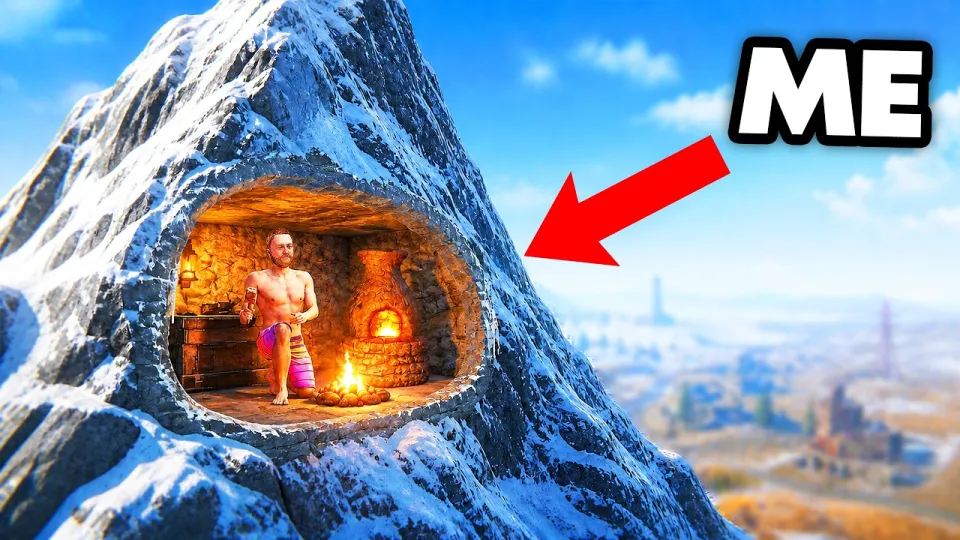
A secret mountain base in Rust is a small, low-profile structure built into rock, cliffs or terrain seams so that passing players read it as part of the landscape rather than as a target. It works because Rust players scan for silhouettes, lights and loot rooms, not for a single 1x2 tucked under an overhang. Memeio's run in the video «I Lived in a Secret Mountain Base in Rust» is a practical demonstration of that idea, and the creator's updates land on Memeio's X profile.
The appeal is easy to understand: a base nobody notices never gets raided, which beats every turret and every honeycombed wall in the game. What follows is a working breakdown of how mountain hideouts are chosen, built, defended and lost.
Why a secret mountain base beats a big compound
The core argument for a hidden mountain base is economic: raiders spend explosives on what they can see, and a base they never see costs them nothing to ignore. A large compound advertises loot, invites offline raids and forces you to defend a wide perimeter. A mountain pocket flips that — you invest a few hundred stone and wood, keep your footprint under two squares of floor, and put the terrain itself in the role of walls.
Rust's procedurally generated maps help here. Cliffs, rock formations and the seams between them create gaps that are technically buildable but visually messy, and messy is exactly what you want. The same logic applies to other survival sandbox games: players who learned the habit in Ark or DayZ tend to arrive in Rust already convinced that location beats fortification.
Picking a spot that players actually walk past
A good mountain spot is one that is close to traffic but outside the sightlines of that traffic. The checklist that matters:
- Monument proximity with a buffer. You want a short run to a tier-1 or tier-2 monument for scrap and components, but not a spawn-side approach where every fresh player runs.
- Vertical cover. An overhang, a rock shelf or a dip behind a ridge hides both the structure and the door from the main approach.
- No skyline. If your roof is visible from the valley floor, the spot is not secret — it is a billboard.
- Build permission. Test the placement before you commit resources; terrain that looks buildable often is not.
- A second exit. A single door in a dead-end pocket is a coffin if someone does find you.
Memeio's version leans on the mountain itself as camouflage, and the audience reaction was blunt about how far that camouflage actually goes — several viewers pointed out that a base is only invisible to someone who is not looking. That is a fair critique, and it is also the point: the goal is to be uninteresting, not undetectable.
Building small and staying quiet
A mountain hideout should be built like a piece of the mountain, not like a base. That means dull materials over clean ones, no exterior lights, no furnaces venting smoke in a visible spot, no wind turbine spinning on a ridge, and no decorative clutter on the roof. Stone and wood read as terrain; sheet metal and glowing doors do not.
Keep the interior functional rather than comfortable. A small box with a tool cupboard, a sleeping bag, a small box stack and a workbench covers most of what a solo player needs, and it keeps the raid cost low enough that a passing group will not bother. If you must expand, expand downward or sideways into terrain rather than upward into the skyline.
Eco-raiding tricks that stretch a starter kit
Early-game raiding in Rust is a resource math problem, and one trick from the video's comment section is genuinely useful: broken wooden spears can be turned into stone spears, which effectively doubles the number of spears you carry for the same stone. The inventory detail matters — keep broken spears ahead of unbroken ones so the crafting order works in your favor.
Beyond that, the standard eco-raid playbook applies to a mountain lifestyle:
- Wooden spears and bone clubs for soft-side doors and wooden walls on decayed or starter bases.
- A bow with fire arrows to bait and pressure rather than to break.
- Satchels only when the target is worth more than the sulfur.
- Timing — hit small bases during quiet hours when the owner is likely offline and neighbors are not watching.
The advantage of a hidden base is that it lets you bank these resources without spending them on defense.
When someone does find you
Every hidden base gets discovered eventually, and the video's run includes the two things that end mountain lives: a player who stumbles onto the spot, and a cheater. The second is worth naming plainly. On official servers, no amount of camouflage protects you from someone using third-party software, and the community reaction to that moment was the same resigned frustration you see in every Rust discussion of the topic.
Against ordinary players, the countermeasures are cheap:
- Keep nothing critical in the visible room. A decoy box with junk buys you time and sometimes buys you peace.
- Stash the important loot. Small stashes buried nearby mean a successful raid costs you a night, not a wipe.
- Rebuild immediately. A raided mountain pocket is usually still a good spot; the raider rarely comes back.
- Move, don't fight. If you are solo in a mountain base, you win by not being in the fight at all.
Common questions about hidden bases in Rust
Most doubts about mountain hideouts come down to visibility, server choice and whether the whole approach is worth the effort. The honest answer is that a hidden base is a multiplier on your own discipline: it rewards players who log in often, keep their footprint small and resist the urge to build something impressive. It punishes players who park a quarry on the ridge and wonder why they get raided. If you play solo or in a duo and you value uninterrupted progress over base aesthetics, the mountain approach pays for itself quickly.
Useful links
- Memeio on X — the creator's main account linked in the video.
- Epidemic Sound — the music library credited for the video's soundtrack.
The takeaway for solo survival players
A secret mountain base in Rust is less about perfect concealment and more about being a bad target: small, quiet, cheap to rebuild and placed where players do not look. Memeio's wipe run shows both halves of that equation — the build works, and the things that break it are usually other players rather than the base design itself. The practical lesson is to treat your hideout as disposable and your loot as stashable, so a single discovery never ends your wipe. For more solo survival experiments in this style, follow the creator's updates at https://x.com/MemeioYT, and treat the channel «Memeio» as the source of the run this breakdown is built on.
Key takeaways
- A mountain hideout survives by being overlooked, not by being unreachable — small footprint, dull materials, no lights, no smoke.
- Broken wooden spears can be recycled into stone spears, effectively doubling spear count for early eco-raids.
- Memeio's wipe run in the video ends with a cheater encounter, a reminder that official servers carry risk beyond raiders.
- Tiny 1x2-style builds tucked into terrain have survived entire wipes on official servers without a single raid.
- Memeio's X account at https://x.com/MemeioYT is the main link attached to the video.
Source: I Lived in a Secret Mountain Base in Rust · Markdown version
Questions & answers
Is a secret mountain base in Rust actually safe from raiders?
No base is safe, but a small mountain hideout avoids most raids simply because nobody notices it. Its real protection is a low profile and cheap rebuild cost, not walls. Expect to be found eventually and keep your valuable loot in stashes nearby.
How do you make a base in Rust hard to spot?
Build small, use dull materials like stone and wood, and avoid anything that signals a base: lights, furnaces venting smoke, turbines on ridges, or a roof breaking the skyline. Tuck the structure into an overhang or terrain seam so it reads as part of the cliff.
What is the broken spear trick for early raiding?
Broken wooden spears can be crafted into stone spears, so a stack of broken spears effectively doubles your spear count for the same stone. Keep the broken spears ahead of unbroken ones in your inventory so the crafting order works correctly.
Do cheaters ruin hidden base strategies on official servers?
Cheaters bypass the entire concealment game, since third-party software reveals things a normal player would never see. That risk exists on official servers regardless of how well you hide, which is one reason some players move to community or moderated servers.